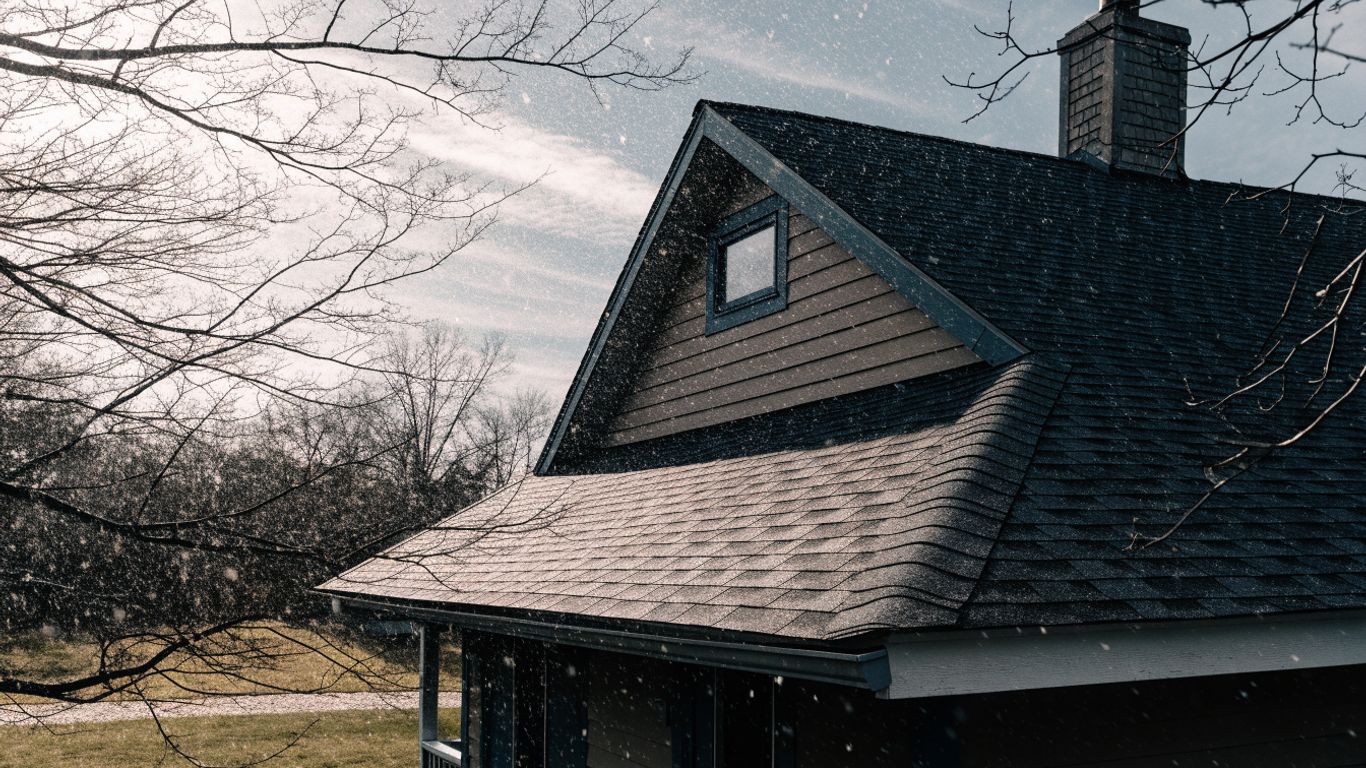
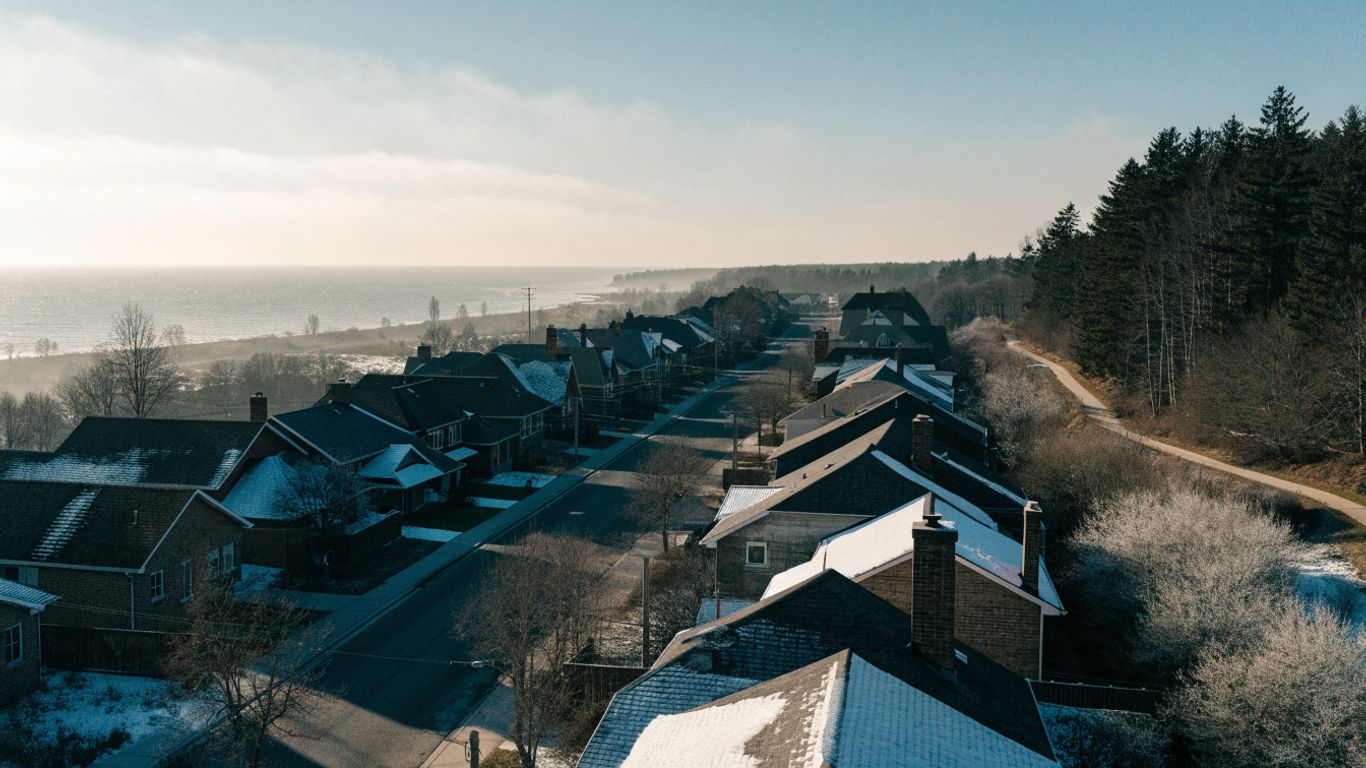
Etobicoke winter roof damage rarely looks the same from one street to the next. A home in Mimico or Long Branch takes lake wind head-on, while a house backing onto the Humber River ravine deals with shade, falling branches, and slopes that dry slowly. Our Above It All Roofing Etobicoke team sees both patterns every winter, and the cause is usually the same: a small weakness that the home’s surroundings keep testing. This guide explains how Lake Ontario and the Humber valley shape winter wear, which roof components take the hit (including flat and metal roofs), what to check before the snow arrives, and how to decide between repair and replacement.
Key Takeaways
Your setting decides which parts of the roof deserve the closest look before winter:
- Lake-facing exposure brings wind-driven moisture to roof edges, ridge caps, and flashing.
- Ravine shade and nearby trees keep roof surfaces damp and add debris to eavestroughs.
- Wind, freeze-thaw cycles, and poor drainage each stress different roof components.
- A pre-winter check of shingles, flashing, eavestroughs, and the attic catches problems early.
- After a hard winter, the pattern and extent of damage matter more than the roof’s age alone.
Why Etobicoke Has Its Own Winter Roofing Challenges
Etobicoke covers a varied landscape, from open stretches along Lake Ontario to tree-lined streets and ravine edges beside the Humber River. That variety changes how wind, moisture, shade, and falling debris affect a roof through the colder months. Two houses in the same neighbourhood can face different winter concerns, depending on roof design, exposure, and the condition of the existing materials. When an aging roof is already near the end of its service life, roof replacement in Etobicoke is far easier to plan before winter than after the first storm.
Lake Ontario: Wind, Moisture, and Freezing Rain
Near the lake, open exposure leaves some roofs more affected by gusty weather than homes sheltered by dense streets or neighbouring buildings. Wind-driven rain and wet snow press against roof edges, ridge caps, and other joints, especially where materials have already loosened. During a freezing-rain event, that moisture freezes on cold surfaces and hides small drainage or sealing problems. A sound roof does not remove the weather risk, but it gives water fewer places to get in.
The Humber River Valley: Ravines, Trees, and Shade
Along the Humber, mature trees and sloping land create a different set of conditions. Branches and leaves reach the roof or collect in eavestroughs, and shaded sections dry more slowly after snow or rain. If your home borders a ravine, look beyond the roof surface to the downspout outlets and the route water takes away from the house. That is the practical side of Humber River roofing in Etobicoke: the checks center on drainage, debris, and shade as much as on shingles.
How Lake Ontario Exposure Damages Roofs in Winter
Lake Ontario roof damage usually starts at a vulnerable detail, not across a whole roof slope. A lifted shingle, worn flashing, or a poorly draining edge gives wind-driven moisture a way beneath the outer surface, and repeated freezing and thawing then works on that weak point all winter. Watch for the pattern after storms that combine strong wind with rain, wet snow, or a fast temperature change.
Wind-Driven Rain and Snow Under Shingles and Ridge Caps
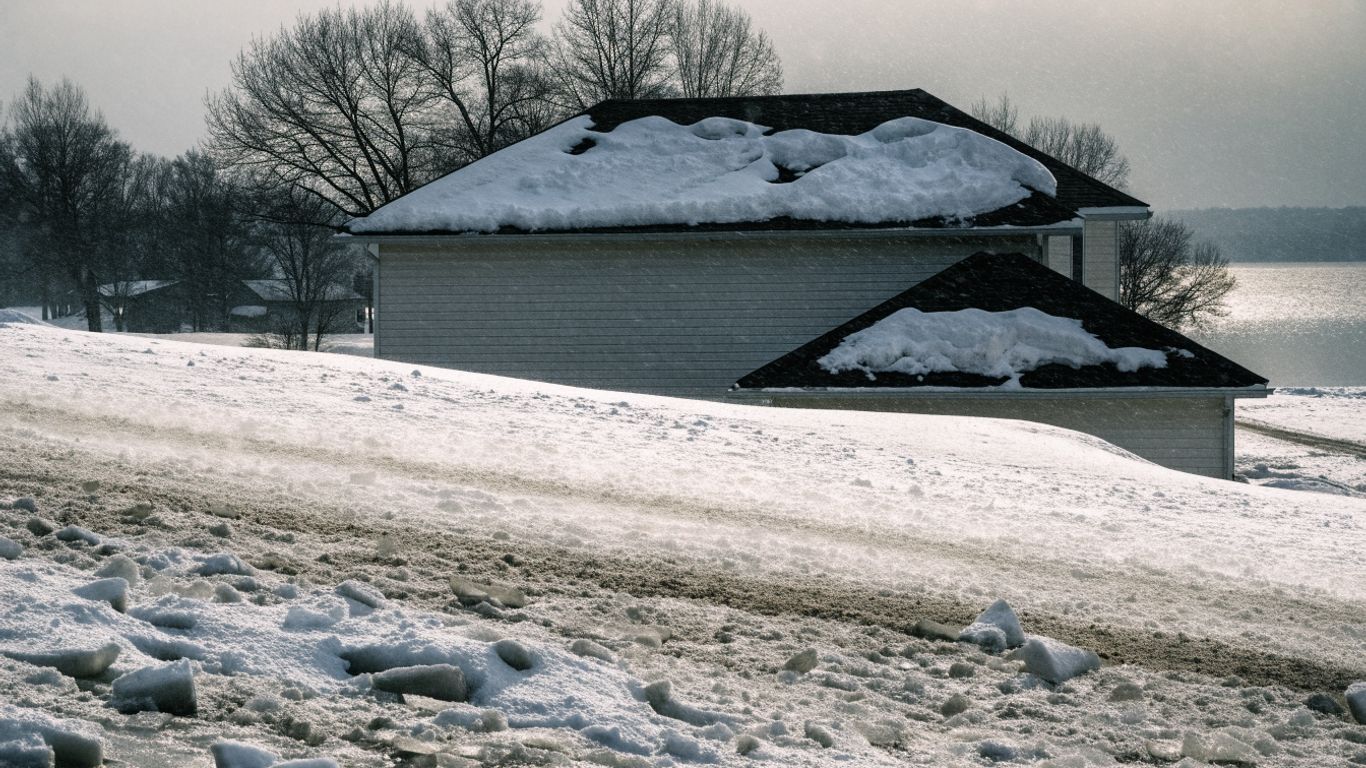
Shingles shed water as it runs down the roof, but wind can push moisture up and under them from unusual directions. If a shingle edge is loose or a ridge cap is damaged, rain or fine snow can reach the layers below. Flashing around chimneys, vents, and wall intersections needs the same attention, since it bridges changes in roof shape, and we see how common flashing problems start with a small gap that wind keeps working. Look for displaced material from the ground, and arrange a closer inspection if you notice indoor staining or visible damage.
Freeze-Thaw Cycles Along the Waterfront
When daytime warmth softens snow and ice and colder air returns, water refreezes around roof edges and in small openings. That repeated movement widens existing cracks and exposes weak spots in aging materials, though it does not mean every roof will leak. This is the basic pattern of Etobicoke roof freeze-thaw damage: an existing vulnerability meets repeated wetting and refreezing. The same cycle at the eaves is how ice dams on Etobicoke roofs form, so a roof that dams up every winter deserves a closer look at insulation, air sealing, and ventilation as well as the shingles.
How the Humber River Corridor Affects Roofs
The Humber corridor brings roof concerns tied to vegetation, shade, and water movement around the property. These are not automatic problems for every home beside the river, but they change how fast a roof dries and how often its drainage needs attention. A proper inspection covers the roof surface, the eavestroughs, the downspouts, nearby branches, and the shaded slopes. Together, those details explain why a roof that looks fine from the street can still need seasonal care.
Mature Trees, Falling Debris, and Clogged Eavestroughs
Mature trees close to the roof scrape shingles, drop debris, and shed branches in heavy weather, while leaves and twigs collect in eavestroughs. A blockage slows runoff and lets water spill at the roof edge or down exterior walls. From a safe position, check for sagging sections, visible debris, and downspouts that look disconnected or blocked. If the same spot clogs every year, consider whether overhanging branches or the layout of the drainage system is the cause.
Shaded Slopes That Stay Wet and Icy Longer
A slope that gets little sun stays damp or icy after a more exposed slope has dried. That longer wet period makes the roof’s true condition harder to judge at a glance, particularly where branches hide the surface. After thawing weather, compare the sides of your home and note any areas that stay wet, collect debris, or show wear. A persistent difference is useful information to share during an inspection, but it does not prove the roof needs replacement.
Winter Roof Risk by Etobicoke Neighbourhood
Neighbourhood names are a starting point, not a verdict. The lake, tree cover, neighbouring buildings, slope, and the roof’s own condition all shape exposure at the property level. Use the comparisons below as prompts for inspection, not as a ranking of risk.
| Setting | Conditions to consider | Areas to check |
|---|---|---|
| Mimico and Long Branch near the lake | More open exposure in some locations | Shingle edges, ridge caps, and flashing |
| Humber Bay and lake-facing blocks | Wind and moisture exposure vary by building | Roof transitions and drainage paths |
| Streets near the Humber River ravines | Shade, branches, and leaf debris matter more | Eavestroughs, shaded slopes, and downspouts |
| The Kingsway and other tree-lined streets | Canopy and shelter vary from property to property | Branch clearance and roof surface condition |
In practice, the table helps you focus, not replace a look at your own home. A house close to the lake may be partly sheltered, while a property farther inland may still have a shaded slope or an exposed corner. Note what you see after storms and during thaws so you can describe the pattern accurately to a roofer.
Roof Components Hit Hardest by Lake and Valley Conditions
Winter exposure tests several parts of a roof at once, and damage often shows up somewhere other than where the water first got in. Shingles shed most precipitation, but flashing, ridge details, eavestroughs, and ventilation decide how the whole system copes with changing conditions. If water reaches the roof decking underneath, a surface repair alone will not solve the problem, which is why a good inspection follows the water path from the likely entry point through the assembly and out to the drainage.
Flat and low-slope roofs, common on additions, garages, and commercial buildings, fail differently from shingle roofs. The usual weak points are membrane splits at seams, flashing separations around drains and penetrations, and areas where water pools long enough to work through. By the time a flat roof leaks indoors, the membrane has usually been compromised for some time, so ponding after a thaw is a cue to book an assessment. If you are weighing a replacement, it helps to know what it costs to replace a flat roof.
Metal roofs shed snow readily but are not maintenance-free. Rust, loose fasteners, and lifting panels are the warning signs, and lake-facing homes should have fasteners and panel edges checked after severe wind. Homeowners choosing between systems can see how metal compares with other roofing materials before deciding. Indoors, attic dampness or a new ceiling stain is a reason for a professional assessment, though neither clue identifies the cause on its own.
Roofing Upgrades Suited to Etobicoke’s Microclimate
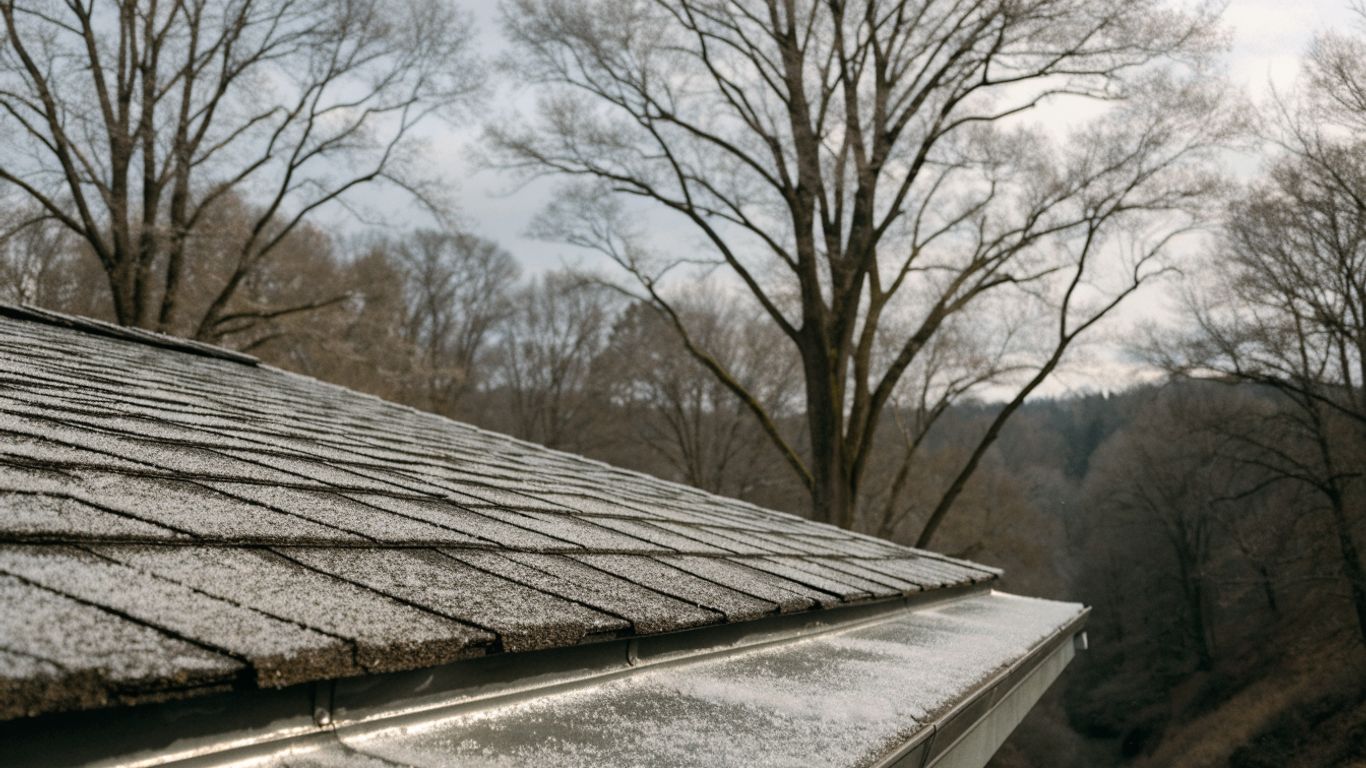
An upgrade should fix a real weakness in your roof, not add a product because winter is coming. Your roof’s slope, existing materials, condition, and exposure all matter when deciding what makes sense. A qualified roofer can tell you whether repair, replacement, or a targeted improvement is the right move, and the goal is a roof whose materials and details suit the house and are installed to manufacturer instructions.
Higher Wind-Rated Shingles and Proper Fastening
On exposed, lake-facing streets, our advice is to choose a higher wind-rated shingle, because the modest price difference can prevent repeat repair calls over the life of the roof. Compare the options in this overview of the best roofing shingles in Canada, then ask whether the shingle and fastening method recommended for your roof match the manufacturer’s requirements. A wind rating cannot make up for poor installation, damaged decking, or weak edge details, so the review should cover ridge caps, eaves, and roof transitions, not only the main shingle field.
Ice and Water Shield, Underlayment, and Ventilation
A proper replacement puts ice and water shield along the eaves and valleys and synthetic underlayment across the full deck, so wind-driven water that gets past the shingles meets a second barrier. Ventilation belongs in the same conversation: recurring ice or interior moisture often points to heat loss and poor attic ventilation and airflow as much as to the roof covering. Treat these layers as one system, because adding a single product does not fix every cause of winter damage.
A Pre-Winter Checklist for Etobicoke Homeowners
A short check before winter lets you notice changes while conditions are still manageable. From the ground, look for visible shingle damage, debris, and drainage problems, and watch for new ceiling stains or dampness indoors. Knowing how to identify roof damage in Etobicoke before the first snowfall makes the check faster. Stay off an icy or snow-covered roof and leave close inspection and repairs to a professional. What you record makes the later assessment more focused.
Lakeside Homes: Wind and Moisture Checks
If your home faces the lake with open exposure, concentrate on places where wind-driven moisture meets a roof edge or transition. After significant weather, check visible ridge caps, shingle edges, flashing, and eavestroughs, and note any change from their usual condition. A short written record of when you noticed a leak or stain helps separate a one-time event from a recurring pattern. If snow accumulation worries you, ask a roofer about safe removal instead of attempting roof work yourself.
Valley and Ravine Homes: Trees and Drainage Checks
For homes near the Humber or under a heavy canopy, make the surrounding drainage part of your seasonal routine. These checks keep you on the ground and focus on the usual trouble spots:
- Look for branches that touch or hang directly over the roof.
- Check visible eavestroughs for leaves, twigs, or sagging sections.
- Confirm from the ground that downspouts look connected and clear.
- Note shaded roof areas that stay wet or icy longer than nearby slopes.
If a check turns up a problem, do not pull debris from an unsafe position or chip at ice. Arrange maintenance or an inspection, then watch whether the same spot fails again. A repeated pattern tells you whether the cause is vegetation, drainage, roof materials, or a mix.
Repair or Replace After a Hard Etobicoke Winter?
A difficult winter does not automatically mean a new roof. The right choice depends on where the damage is, how far it spreads, the condition of the surrounding materials, and whether similar problems have appeared before. Start with a careful assessment, not a decision based on roof age or one visible defect.
If damage is limited to a small area or a single roof detail, a targeted repair is reasonable as long as the surrounding materials are still serviceable. Ask what caused the problem and whether nearby flashing, shingles, or drainage parts also need work, because a repair that fixes only the visible mark will not help if water is getting in elsewhere. Replacement is worth discussing when damage is widespread, materials are deteriorating in several areas, or repeated repairs have not stopped the problem. Ask for an explanation of what is damaged and what is still sound, and compare it against what a roof replacement costs in Etobicoke, keeping in mind that the final scope depends on your roof.
Book a Free Etobicoke Roof Inspection Before Winter Hits
If your home sits near the lake, the ravine, or under a heavy canopy, a professional look before the first snowfall is the simplest way to find weak spots early. We will tell you honestly whether your roof has reliable years left, whether a targeted repair makes sense, or whether replacement is the better value. Our crews hold Ontario’s mandatory Working at Heights certification and are covered by WSIB.
Book a free roof inspection in Etobicoke or request a quote by calling 647-771-1554. Our Etobicoke office is at 3250 Bloor Street West, East Tower, Suite 600, Etobicoke, ON M8X 2X9.
FAQs
Does living near Lake Ontario mean more winter roof damage in Etobicoke?
Not automatically. Etobicoke winter roof damage depends on your home’s exposure, nearby shelter, roof design, and the condition of its materials. Open, lake-facing streets see more wind-driven rain and snow at roof edges and ridge caps, so those homes benefit most from a pre-winter check.
Why do roofs near the Humber River ravines stay wet or icy longer?
Slopes shaded by mature trees and ravine terrain get less direct sun, so they dry more slowly after rain, snow, or a thaw. Leaves and branches add to the problem by holding moisture against the roof and blocking drainage. Compare the sunny and shaded sides of your home after a thaw.
Can clogged eavestroughs cause winter roof problems?
Yes. A blocked eavestrough slows runoff, so water spills at the roof edge or down exterior walls instead of draining away. Homes under heavy tree cover are most affected. Clear the troughs and confirm the downspouts are connected before winter, and keep your inspection from the ground.
Do flat and metal roofs handle Etobicoke winters differently from shingle roofs?
Yes. Flat roofs tend to fail at membrane seams, drains, and spots where water pools after a thaw. Metal roofs shed snow readily, but rust, loose fasteners, and lifting panels are warning signs, especially on lake-facing homes. Both need regular checks after severe weather.
How can I tell whether wind-driven rain has gotten under my shingles?
Look for a new ceiling stain, damp attic insulation, or lifted and displaced shingles and ridge caps. These signs do not show where the water entered, because it can travel along framing before appearing indoors. A professional can trace the path and inspect the likely entry points.