A roof that looks acceptable from the street can still fail once snow, ice, and repeated freeze-thaw cycles arrive. Since 2000, Above It All Roofing has worked on roofs across Mississauga, from Port Credit to Churchill Meadows, and the pattern is consistent: the roofs that fail in winter almost always showed warning signs months earlier. This guide covers the signs we look for, how to check them safely from the ground and the attic, how to decide between repair and replacement, and which symptoms mean you should call a roofer this week rather than next month.
Key Takeaways
If you only have a minute, these are the points that matter most before the first sustained cold spell:
- Look for damage across several areas of the roof, not just one isolated shingle.
- Check your eavestroughs for granule buildup and your attic for moisture, frost, or daylight.
- Roof age is a useful clue, but condition, leak history, and ventilation matter just as much.
- Stay off the roof. Use ground-level and attic observations instead.
- Call a professional promptly for sagging, active leaks, or widespread damage.
Why Mississauga Winters Are So Hard on Aging Roofs
A Mississauga roof handles heavy snow, freezing rain, wind, and long stretches when temperatures swing above and below zero. Water enters small gaps in shingles and flashing, freezes, and expands. Each cycle widens the gap a little further, and wear that looked minor in September becomes a leak or loose material by January.
Location matters too. On streets close to Lake Ontario in Port Credit, Lakeview, and Clarkson, wind pushes rain under shingle edges, ridge caps, and flashing, and those are almost always the first components to fail. The City of Mississauga’s own winter-weather guidance warns homeowners about ice damming, with icicles along the roof edge and water stains on ceilings as the signs to watch for (City of Mississauga).
Snow and ice also make problems harder to find once winter is underway. A leak can start in the attic or inside a wall before a stain ever shows on your ceiling, and a sudden thaw sends water straight to the weakest joints. The best time to check is before the first sustained cold spell, when inspections and repairs are still easy to schedule.
Is Your Roof Past Its Prime? Age Benchmarks for Mississauga Homes
Most Mississauga homes have asphalt shingle roofs that last 20 to 25 years under normal conditions. Installation quality, attic ventilation, sun and wind exposure, and maintenance all push that number up or down, so treat age as a prompt to look more closely, not as a deadline.
Some parts of the city reach the end of that range sooner than owners expect. In Erin Mills, Meadowvale, and Lisgar, many homes were built in the 1970s to 1990s and are now on their second or third roof, and long valleys plus original attic ventilation are the usual trouble spots. In Churchill Meadows and East Credit, the builder-grade shingles installed when those subdivisions went up are now aging faster than many owners realize. If your neighbours are re-roofing, your roof is probably the same age and the same shingle. Homes built before 1980 are also more complex and more expensive to re-roof, which is worth knowing before you compare quotes.
If you do not know when your roof was installed, check your home purchase documents or ask the previous owner for invoices or warranty paperwork. Use the table below as a starting point, then confirm with an inspection.
| Roof clue | What it suggests | Useful next step |
|---|---|---|
| Under about 15 years old, no visible damage | Likely still has service life, though storms can cause localized problems | Keep records and check after severe weather |
| Roughly 15 to 20 years old, isolated wear | A targeted repair may solve it | Ask a roofer to assess the affected area |
| 20 years or older, widespread wear or recurring leaks | Replacement is often more practical than repeated patching | Book an assessment before winter |
An older roof that stays even and dry is not automatically an emergency, and a newer roof with a leak still needs attention. The signs you need a new roof before winter usually show up as a pattern: widespread deterioration, repeated water entry, or repairs that keep coming back. That combination matters more than age alone, and it is the same pattern we use to judge whether it is time to replace your roof.
8 Warning Signs Your Roof May Not Make It Through Winter
No single symptom proves a roof will fail, but several together deserve a close look. These winter roof damage signs also give you the right words to describe what you have noticed when you call a roofer. Keep the inspection safe by observing from the ground or from inside your home.
Curling, Cracked, Brittle, or Missing Shingles
From the ground, look for shingle edges that lift, cracked areas, and patches where material is gone. One damaged shingle points to a localized fix. Wear spread across several slopes means the surface as a whole is losing its ability to shed water, and winter wind will exploit those weak spots. If shingles are already missing, missing shingle repairs before the first winter storm keep water out of the decking.
Heavy Granule Loss in Your Eavestroughs
Asphalt shingles have a granular surface that protects the asphalt layer beneath. When you find a heavy layer of coarse, sand-like material in your eavestroughs or at the base of downspouts, the shingles are shedding that protection. A small amount is normal on a new roof. A large amount alongside bare-looking or uneven shingles is a different story.
Water Stains, Damp Spots, and Peeling Paint Indoors
Brown ceiling marks, damp patches, peeling paint, or a musty smell mean moisture is getting into the house. The stain is rarely directly under the opening, because water travels along framing and drywall before it shows itself. By the time a stain appears, water has usually passed through two or three failure points. If a stain is growing or the area feels wet, treat it as an active leak and book roof leak replacement rather than waiting for the next storm.
Sagging Rooflines and Soft Spots
A roofline that dips or looks uneven needs prompt attention. Sagging can come from moisture-damaged decking or a structural problem, and only an on-site inspection can identify which. Do not climb onto the roof or press on a suspected soft area. Keep people away from any visibly compromised section and arrange an inspection.
Cracked or Separating Flashing Around Chimneys and Skylights
Flashing directs water away from the joints around chimneys, skylights, and vent pipes. From the ground you may see pieces that look bent, lifted, or separated, though small defects are hard to spot from below. On older streets such as Mineola, Lorne Park, Cooksville, and Streetsville, aging flashing is one of the most common leak sources we find. If a stain appears near a chimney or skylight, mention both the indoor symptom and the exterior location when you call.
Recurring Ice Dams and Heavy Icicles
Ice dams form when snow melts on a warm roof, runs to the cold eave, and refreezes. Heat escaping into the attic and poor ventilation are the usual causes, which is why the same roof can dam up every winter. Icicles alone do not prove damage, but repeated ice buildup together with leaks or interior stains does. Never knock ice off yourself, because falling ice can injure you or damage property. When dams keep returning, professional ice dam removal clears the ice safely, and the heat loss or ventilation problem behind it still needs fixing.
Daylight, Frost, or Moisture in the Attic
If your attic is safely accessible, use a flashlight and look for daylight coming through the roof boards, damp or compressed insulation, frost on the underside of the roof deck, and dark marks on the wood. These findings often appear before any ceiling stain. Stay on the hatch ladder or a stable surface and never step on insulation. Frost and dampness usually point to poor airflow or a leak above.
Rising Heating Bills and Poor Attic Ventilation
A higher heating bill has many possible causes, so it does not prove a roof problem by itself. When it appears alongside attic frost, damp insulation, or recurring ice dams, the roof and the attic should be assessed together. Installing a new roof over an overheated attic shortens its life, which is why we recommend fixing attic ventilation while the old roof is off.
Repair or Replace? How to Decide Before the Snow Falls
The answer depends on how widespread the damage is, how much of the roof is still sound, and whether problems keep returning. A roofer should walk the roof, check the flashing and ventilation, and explain what is repairable and what is not. It helps to share the roof’s age, your leak history, and any changes you have noticed indoors. A quote given from the driveway misses half the story, so insist on someone getting on the roof.
When a Targeted Repair Still Makes Sense
A repair is reasonable when damage is confined to a small area and the surrounding roofing is in sound condition, such as a few storm-lifted shingles or a failed seal at one vent. Damage that is limited to one slope is very different from deterioration across the whole roof. A roof tune-up can catch failing caulk, minor shingle damage, and granule buildup before they turn into leaks. Ask what the repair covers, whether the surrounding areas were checked, and what would mean you should call again.
When Replacement Is the Smarter Investment
Replacement makes more sense when damage is widespread, leaks recur, or patching has become a yearly habit. A proper replacement includes tear-off of the old materials, new decking where it is damaged, ice and water shield along the eaves and valleys, synthetic underlayment across the full deck, shingles installed to manufacturer specifications, sealed flashing at every penetration, and ridge ventilation. Get that scope in writing before work starts, because knowing what a professional roof replacement should include is the best protection against skipped steps.
The roof replacement cost in Mississauga for a typical detached home generally runs from $8,000 to $18,000 CAD for asphalt shingles, depending on roof size, pitch, the shingle line, and the condition of the deck. Most homes are finished in one day, and larger or more complex roofs can take two. If you are ready to price the job, our roof replacement in Mississauga service starts with a written, itemized quote. Replacing like for like with new shingles generally does not need a city permit, but confirm with the City of Mississauga before you start.
A Safe Ground-Level Roof Check You Can Do This Weekend
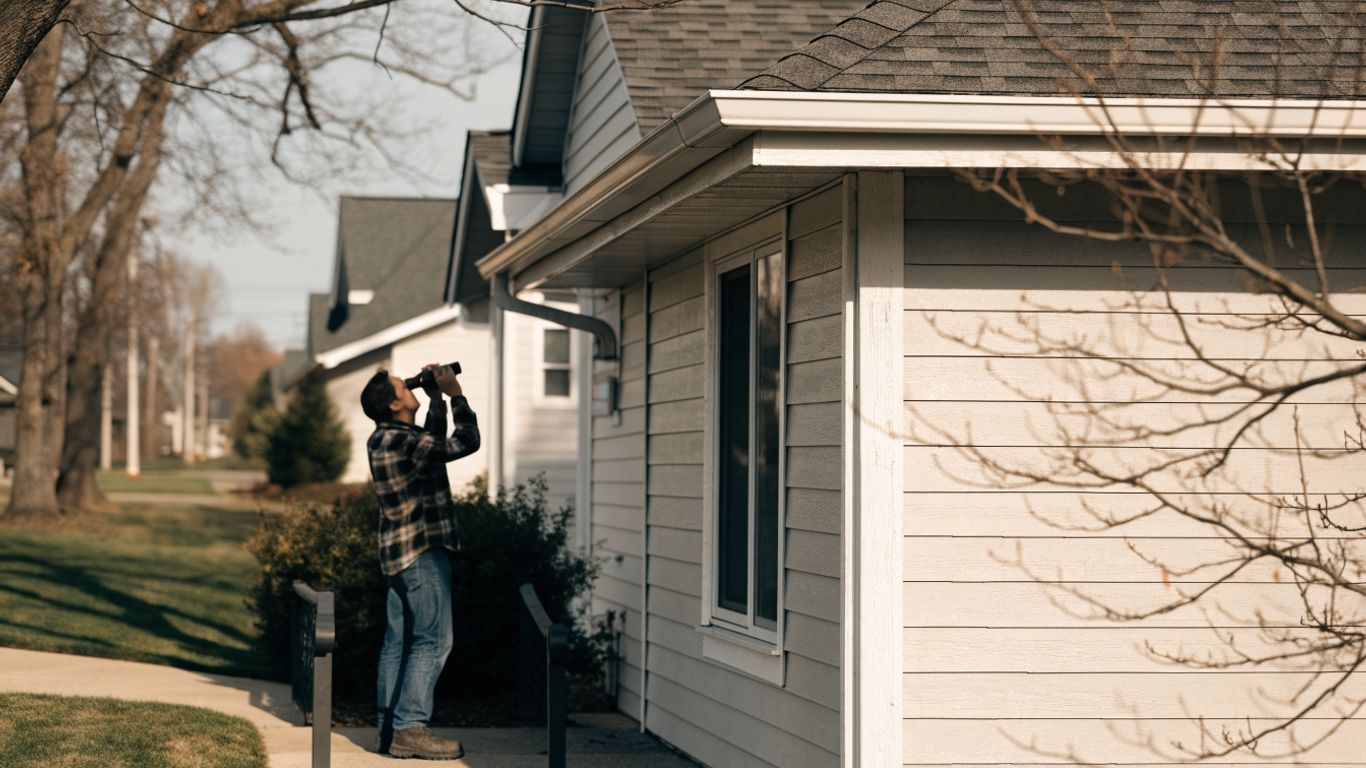
You can gather useful clues without a ladder. Choose a clear day, walk around the property, and look at each visible slope from a safe distance. Binoculars help you see details, but stop if ice, branches, poor light, or any other hazard makes observation difficult.
A simple check works best when you write down what you see instead of relying on memory. Record the location and approximate size of each concern, and take a photo from the ground if it is safe. These notes do not replace an inspection, but they make your conversation with a roofer far more specific. Use this short list to organize them:
- Look for missing, cracked, curling, or visibly uneven shingles.
- Check eavestroughs for a heavy accumulation of granules or debris.
- Look indoors for new ceiling stains, peeling paint, or damp areas.
- If the attic is safely accessible, check for moisture, frost, or daylight.
Afterward, compare your notes with the roof’s approximate age and any leak history. Take particular care with active water entry or a sagging line, and do not test a soft spot by walking on it.
What Happens If You Ignore the Warning Signs
A visible leak is often one of the last warning signs, not the first. Water that gets past the shingles reaches the underlayment, then the decking, then the insulation and ceiling. Each layer it reaches turns a small repair into a larger one, and the exact outcome depends on where water enters and how long it keeps entering. That is why a single stain is hard to judge on its own.
Winter makes the situation harder in two ways. Snow cover hides the original trouble spot, and freezing conditions make repairs harder to schedule and riskier to carry out. A leak that shows up during a thaw can also appear to stop when temperatures drop, even though the opening is still there.
Waiting does not guarantee failure, but it can leave you with fewer convenient options if conditions worsen. If you see repeated leaks, loose roofing, or signs of sagging, get professional help rather than relying on a temporary patch. When water is actively coming in, call right away instead of waiting for a scheduled visit.
Is It Too Late to Replace Your Roof This Fall? What to Know Before Winter
Fall replacement is often still possible, but timing depends on contractor availability, the weather forecast, the roof’s condition, and the materials involved. Asphalt shingles use adhesive strips that seal best in mild temperatures, and manufacturers publish cold-weather installation guidance, so ask any roofer how they handle low temperatures and whether the proposed schedule fits the forecast. A calendar date alone does not make a job safe or impossible.
If your roof has active leaks or widespread damage, contact a professional right away and describe the symptoms. Ask about the expected schedule, weather contingencies, and what protection is appropriate if permanent work cannot happen immediately. Temporary measures should be done safely and never mistaken for a completed repair.
If the roof is stable and the concern is mainly age, you may have time to compare options. Replacing on your own schedule is far better than scrambling after a storm, but the right choice depends on what an inspection finds.
Which Warning Signs Mean “Call a Roofer This Week” and Which Can Wait
Some symptoms call for a fast response because they may mean active water entry or a compromised structure. Active leaks, a growing ceiling stain, visibly sagging areas, and large patches of missing roofing all belong in that group. Widespread cracking, recurring ice-dam leaks, and daylight or moisture in the attic also deserve timely attention.
Other symptoms can be documented and discussed at a scheduled visit, especially if they are isolated and unchanged. A minor defect with no sign of water entry is less urgent, but it should not be forgotten. When you are unsure, describe what you see to a qualified roofer and ask how urgently it should be assessed. When you book that visit, it helps to know what to expect during a roof inspection in Mississauga, so you can tell a thorough assessment from a quick look from the driveway.
When you call, tell us when the symptom began, whether it changes during rain or a thaw, and whether you have seen related signs indoors or in the attic. Photos taken safely from the ground help us locate the problem. Do not climb up for a closer look; a professional can decide what needs to be examined on site.
Book a Free Roof Inspection in Mississauga Before the First Snowfall
If several of these signs sound familiar, the safest next step is a professional assessment before snow covers the roof. We will tell you honestly whether your roof still has reliable years left, whether a targeted repair makes sense, or whether replacement is the better value. Our crews hold Ontario’s mandatory Working at Heights certification and are covered by WSIB, and we are a CertainTeed Select ShingleMaster and GAF-certified installer.
Book your free roof inspection or request a quote by calling 647-771-1554. Our Mississauga office is at 2395 Homelands Drive, Unit 209, Mississauga, ON L5K 1H3. If you are planning a larger project, ask about financing when you call.
FAQs
How can I tell if my roof will make it through winter?
Look for several clues together, not one: curling or missing shingles on more than one slope, heavy granules in the eavestroughs, ceiling stains, and frost or daylight in the attic. A roof over 20 years old with a combination of these should be inspected before the first heavy snowfall.
Should I repair or replace an old roof before winter?
Repair makes sense when damage is limited to one small area and the rest of the roof is sound. Replacement is usually the better investment when wear is widespread, leaks keep returning, or patching has become a yearly habit. An on-roof inspection, not a quote from the driveway, is what settles it.
Can I check my roof without climbing on it?
Yes. Walk around the house on a clear day and look at each slope from the ground, using binoculars if you have them. Check eavestroughs for granules, look for ceiling stains indoors, and inspect the attic from the hatch. Never walk on a roof or knock ice off it.
Is it too late to replace a roof this fall in Mississauga?
Often not. Timing depends on the forecast, crew availability, and the roof’s condition. Asphalt shingles seal best in mild temperatures, so ask any roofer how they handle cold-weather installation. Most Mississauga homes take one to two days, so a good weather window can still be used.
What should I do if I find a ceiling stain in winter?
Treat a growing or damp stain as an active leak. Note when it appeared and whether it changes during rain or a thaw, take a photo, and call a roofer promptly. Water often travels along framing, so the opening is rarely directly above the stain. Do not climb up to look for it.