If you own a home in Etobicoke and you’re dealing with a roof leak, a sagging ceiling, or you’re simply planning ahead for your next reroof, what’s happening beneath your shingles matters just as much as the shingles themselves. This guide breaks down the real differences between plywood and OSB roof decking, and walks through the warning signs of roof decking that Etobicoke homeowners often miss until the problem becomes expensive to fix.
Key Takeaways
- Roof decking is the structural plywood or OSB layer under your shingles. If it fails, a new roof surface will not fix the underlying problem.
- Etobicoke’s mix of 1950s to 1970s bungalows and newer infill homes means deck condition varies block by block, not just by house age.
- Standard residential roof sheathing in Ontario is 7/16″ OSB or 15/32″ (1/2″) plywood, per Ontario Building Code Section 9.23.
- Replacing individual damaged panels typically runs $150 to $400 CAD per sheet installed in the GTA, depending on access and tear-off scope. Full deck replacement during a reroof usually adds $2 to $4 per sq. ft. to the project.
- Sagging, soft spots, attic staining, and rot around chimneys or skylights are the most common signs our crews find on Etobicoke inspections.
What Is Roof Decking and Why It Matters for Etobicoke Homes
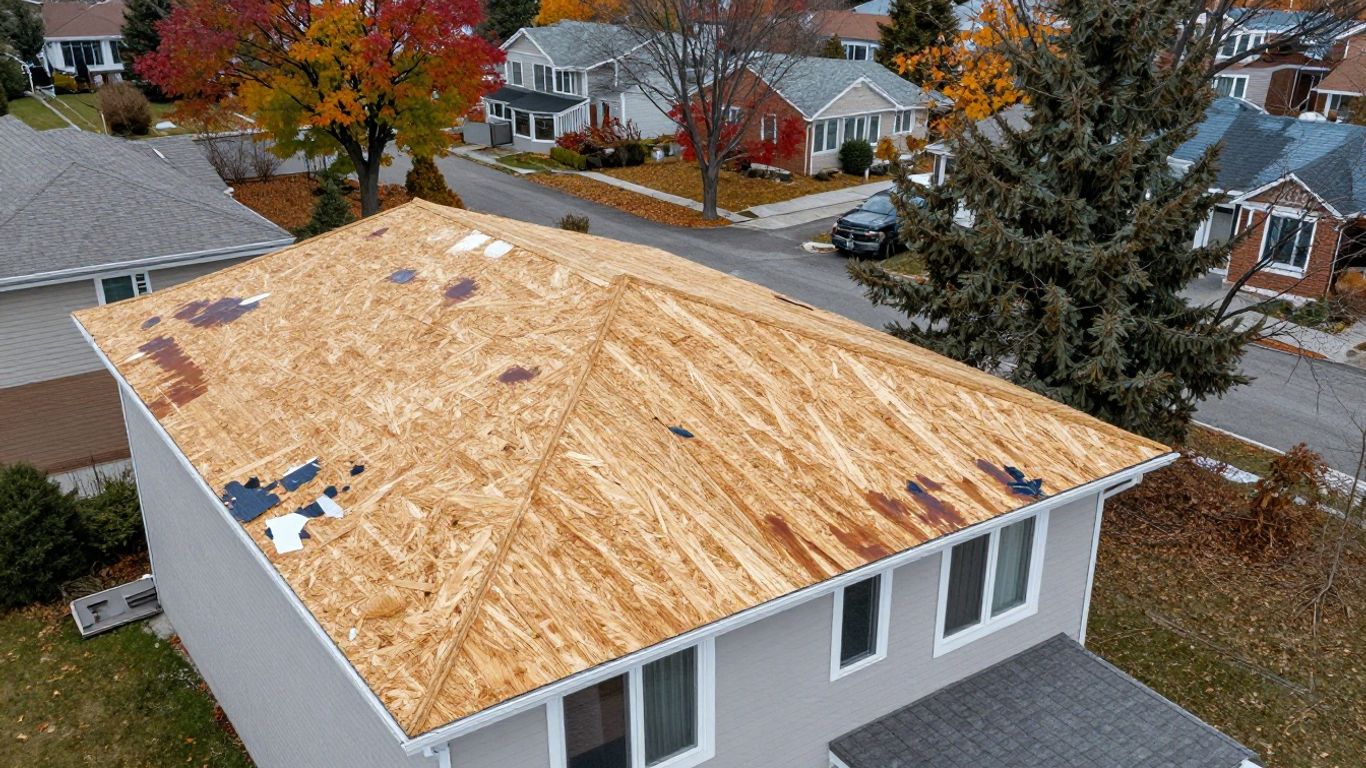
Roof decking (or roof sheathing) is the layer of plywood or OSB panels fastened directly to your rafters or trusses. Everything else, including the roof underlayment layer, ice and water shield, and shingles, is installed on top of it. If the decking underneath is compromised, replacing the shingles alone will not solve an ongoing roof leak problem or restore structural integrity.
The Role of Roof Decking in Your Roofing System
The deck is what shingle nails actually bite into. On one recent tear-off in the Islington to City Centre West area, our crew found that roughly a third of the original 1/2″ plywood panels had gone soft near the eaves. The shingles above looked fine from the street, but the fasteners had almost nothing solid left to grip. Under the Ontario Building Code, sheathing must meet CSA O325 panel ratings and be fastened at specified nail spacing (typically 6″ on panel edges, 12″ in the field). Corners cut here are invisible until a windstorm lifts a section of roof.
Common Decking Ages in Etobicoke’s Older Neighbourhoods
Neighbourhoods like Alderwood, Long Branch, and parts of Kingsway South have a lot of homes built between the 1950s and 1970s that have already been reroofed once or twice. Here’s the detail most homeowners don’t realize: a lot of past reroofing jobs in this era only tore off shingles and re-decked over the old boards with new plywood, without checking the original 1×6 board sheathing underneath for rot. When we open these roofs up, we sometimes find three layers (original boards, a plywood overlay, and the current shingles), and the original layer is where the hidden damage usually is.
Plywood Roof Decking: Pros and Cons
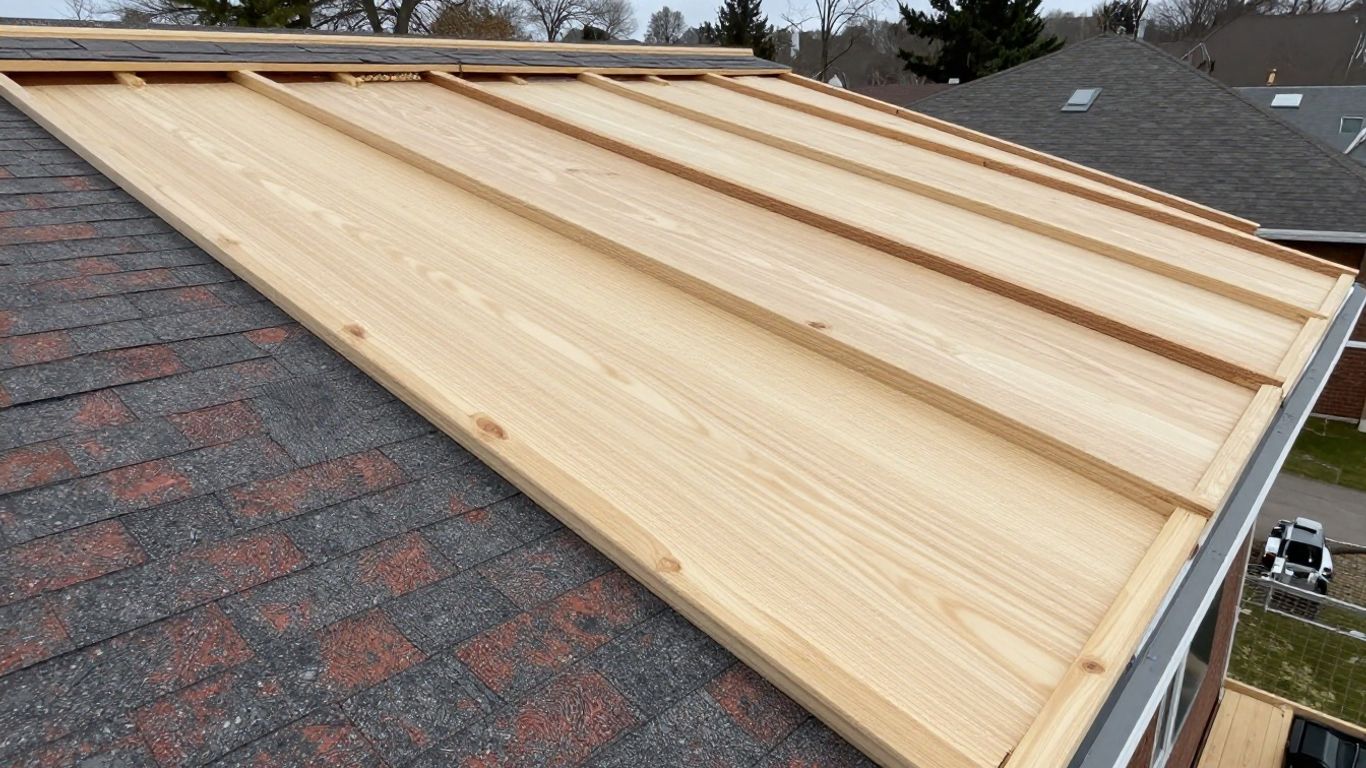
Plywood is made from thin wood veneers, cross-laminated and glued under pressure, typically in 4×8 sheets at 3/8″, 1/2″, or 5/8″ thickness for residential roofing.
Durability and Moisture Resistance
Plywood holds its shape better than OSB under intermittent wetting because the cross-grain layers resist swelling along a single axis. It’s also easier to spot damage early: plywood tends to delaminate in visible layers before it fails structurally, whereas OSB can look intact right up until it crumbles. That said, plywood is not waterproof. CDX-grade plywood exposed to a sustained roof leak will delaminate within a season, particularly around valleys, chimney saddles, and skylight curbs where water tends to pool.
Cost and Lifespan
Plywood typically runs $38 to $55 CAD per 4×8 sheet (1/2″ thickness) at GTA lumber suppliers as of 2026, roughly 15 to 25% more than comparable OSB. With proper ventilation and no chronic leaks, plywood decking can last 30+ years, often outlasting two or three shingle replacement cycles. We generally recommend matching plywood-to-plywood when doing a partial repair, since mixing panel types on the same roof plane can create slightly different nailing and expansion behaviour.
OSB Roof Decking: Pros and Cons
Oriented strand board is made from wood strands compressed and bonded in cross-oriented layers, and it’s the material used on the majority of new-construction and reroofing jobs we quote in the GTA today.
Strength and Affordability
OSB typically costs $28 to $42 CAD per 4×8 sheet (7/16″ thickness), making it the more budget-friendly option for full deck replacement. Its uniform manufacturing gives it consistent load ratings across a batch of sheets, which matters on larger commercial or multi-panel residential jobs where consistency reduces callback risk.
How OSB Handles Etobicoke’s Humidity and Winters
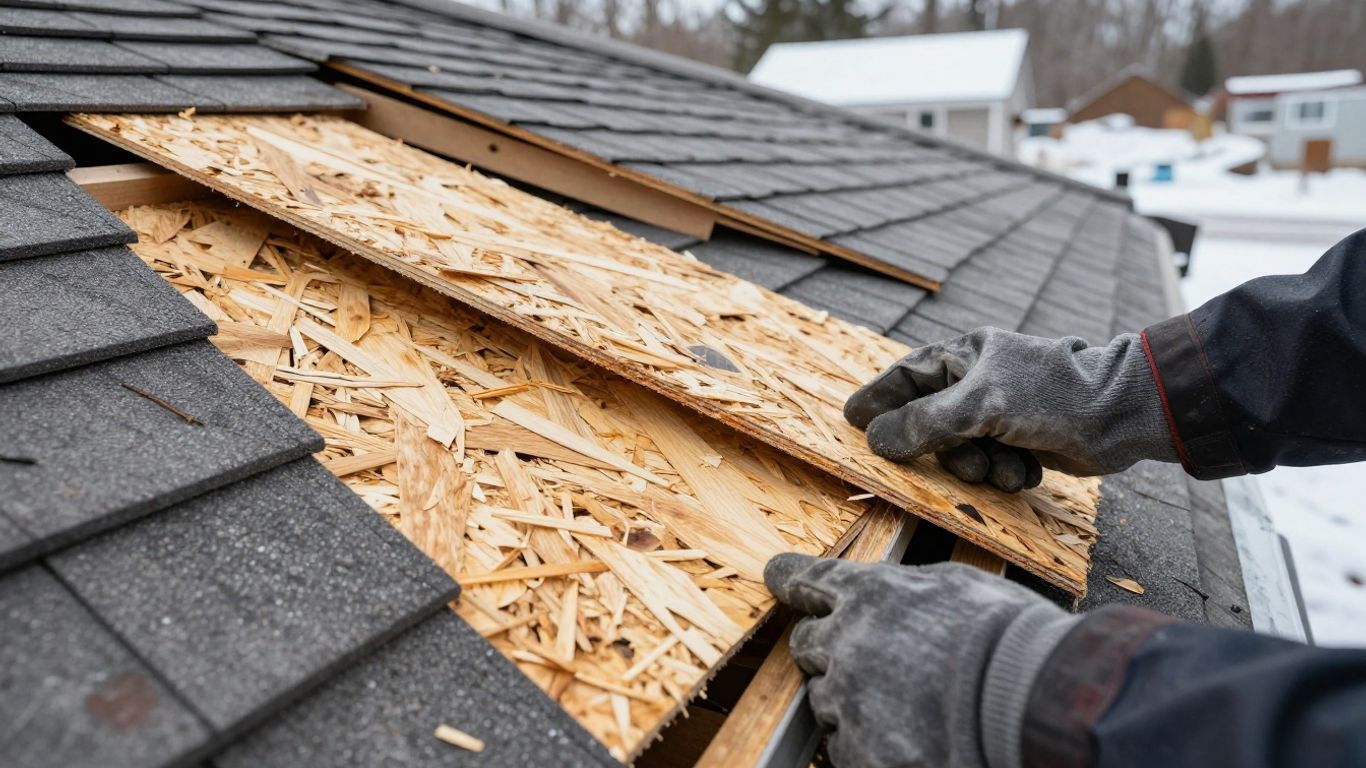
OSB is more sensitive to prolonged edge-wetting than plywood. The strands at panel edges can swell and lose fastener grip faster if water sits there repeatedly. This matters specifically in Etobicoke because of lake-effect humidity off Lake Ontario combined with freeze-thaw cycling through a typical GTA winter (Environment Canada data shows the region regularly swings above and below 0°C dozens of times each winter). On a roof with attic ventilation problems, that cycling drives condensation onto the underside of the OSB even without an active leak. We see this most often in attics with blocked soffit vents or insufficient baffles.
Plywood vs. OSB: Which Is Better for Etobicoke Roofs?
There’s no blanket winner. The right call depends on your existing panels, roof pitch, budget, and how exposed the deck has been to moisture.
Climate Considerations (Freeze-Thaw, Moisture, Ice Damming)
Ice dam formation is the climate factor that matters most for Etobicoke roofs specifically. When heat escapes from the attic and melts snow on the upper roof, that meltwater refreezes at the colder eaves and backs up under the shingles. This is why the Ontario Building Code requires ice and water shield membrane extending at least 900mm (36″) up from the eave edge in this climate zone. Without that protection, backed-up water sits directly against the deck panels for days, and OSB in particular will show edge swelling faster than plywood under that kind of repeated soaking.
Cost Comparison Table
| Consideration | Plywood | OSB |
|---|---|---|
| Material cost (per 4×8 sheet, GTA 2026) | $38-$55 | $28-$42 |
| Typical thickness (residential) | 1/2″ (15/32″) | 7/16″ |
| Moisture behaviour | Delaminates visibly; better dimensional stability | Edge-swells first; can fail with less visible warning |
| Best fit | Matching existing panels, localized repair | Full deck replacement, budget-driven reroofs |
Panel cost is usually the smaller line item. Labour, tear-off, disposal, and access account for most of a decking repair invoice. A single-panel repair in an accessible area might run $150 to $400 CAD installed. A full deck replacement during a reroof typically adds $2 to $4 per sq. ft. to the overall project cost.
Panel cost is usually the smaller line item. Labour, tear-off, disposal, and access account for most of a decking repair invoice. A single-panel repair in an accessible area might run $150 to $400 CAD installed. A full deck replacement during a reroof typically adds $2 to $4 per sq. ft. to the overall project cost.
Signs of Roof Decking Damage to Watch For
Roof decking damage rarely announces itself with a dramatic leak on day one. In our experience inspecting roofs across Etobicoke, the earliest signs usually show up in the attic or along the roofline long before water ever reaches your ceiling. Here are the three signs our crews check for on every inspection.
Sagging or Soft Spots on the Roof
A visible dip between rafters, or a spongy feel when walked on by a roofer, points to compromised decking. On a Long Branch inspection last winter, we found a 3-foot soft area near a roof valley that wasn’t visible from the ground at all. It only showed up when our technician walked the slope and felt the deck flex underfoot. If you notice a sag from the street, assume the damage underneath is more extensive than what’s visible.
Water Stains or Mold in the Attic
Brown or grey staining on the underside of the decking, or dark mold-like growth on rafters, usually means water has been getting in for a while. Condensation from poor ventilation, a failed flashing detail, or ice-dam backup are the three most common causes we find. Water often travels several feet along a rafter before dripping, so the stain isn’t always directly under the leak source.
Visible Rot Around Vents, Skylights, or Chimneys
Roof penetrations are where flashing failures concentrate moisture in one spot for years. Softened, crumbling wood or discoloured sheathing around a chimney saddle or skylight curb almost always means the flashing seal failed at some point. Replacing the rotten panel without correcting the flashing just resets the clock on the same problem.
Not sure if what you’re seeing is a quick replacement or something bigger? Book a free roof deck inspection with our Etobicoke crew. We’ll show you photos of what we find before recommending anything.
When to Repair vs. Replace Roof Sheathing
A localized repair makes sense when damage is confined to a few accessible panels and the moisture source has been identified and fixed, for example, swapping 2 to 3 sheets around a single chimney leak. Full roof deck replacement becomes the better call once damage spans multiple roof planes, several panels show soft spots, or the same leak has recurred more than once despite prior patching. On full tear-offs, we typically find that homes with three or more penetrations (skylights, vents, chimneys) that haven’t had flashing serviced in 15+ years need at least partial deck replacement, not just shingle work.
Ask any contractor quoting the job for a written scope that specifies: the number of sheets being replaced, panel thickness and grade, disposal of wet insulation, and whether flashing is being replaced or reused.
Why Choose Above It All Roofing for Roof Decking in Etobicoke
Our crews are based out of our local Etobicoke roofing office at 3250 Bloor Street West, and we’ve handled decking repairs across Alderwood, Long Branch, Kingsway South, and the Islington to City Centre West corridor. We’re WSIB-covered, GAF and CertainTeed certified, and we separate roof-covering work from decking work on every quote. You’ll see exactly how many sheets are being replaced and why, not just a lump-sum “roof replacement” line.
Before any new material goes down, we check panel thickness against OBC minimums, inspect the framing underneath damaged sections, and confirm flashing and ventilation are corrected, not just the visible panel. If you’re weighing a repair against a full reroof, we’ll give you both numbers and explain the trade-off in plain terms.
Conclusion
Plywood and OSB are both legitimate roof decking materials. The right choice comes down to your existing panels, budget, and how well moisture has been kept out over the years. Watch for sagging, attic staining, and rot around roof penetrations, and get a written scope before approving any repair.
In Etobicoke’s freeze-thaw climate, catching decking damage early is what keeps a $300 panel repair from becoming a $3,000+ deck replacement. Call 647-771-1554 for a free Etobicoke roof inspection and ask about 0% interest financing for 12 months if a full deck replacement turns out to be the right call.
Frequently Asked Questions
Is plywood better than OSB for roof decking?
Not universally. Plywood handles intermittent moisture slightly better and is easier to spot-repair, while OSB is more cost-effective for full deck replacement. The Ontario Building Code accepts both when they meet CSA O325 panel ratings and correct fastening schedules.
How long does roof decking last in Etobicoke’s climate?
With proper ventilation and no chronic leaks, both materials can last 30+ years. Ice damming, blocked soffit vents, and unaddressed flashing leaks are the most common causes of premature failure we see locally.
Can damaged roof decking be repaired without replacing the whole roof?
Yes, if damage is limited to a few accessible panels and the moisture source is fixed at the same time. We typically recommend full deck replacement once damage spans multiple roof planes or has recurred after a prior patch.
What does soft roof decking feel like?
It flexes or feels spongy underfoot rather than solid. Don’t walk on a roof you suspect has soft decking. Have a professional assess it first.
Do ice dams damage roof sheathing?
Yes. Backed-up meltwater can sit against the deck at the eaves for days, which is why the Ontario Building Code requires ice and water shield membrane extending at least 900mm up from the eave in this climate zone.
What should a roof decking inspection include?
A thorough inspection checks the roof surface, the attic-side of the decking, all flashing and penetrations, ventilation (intake and exhaust), insulation condition, and any signs of past or active moisture intrusion.