
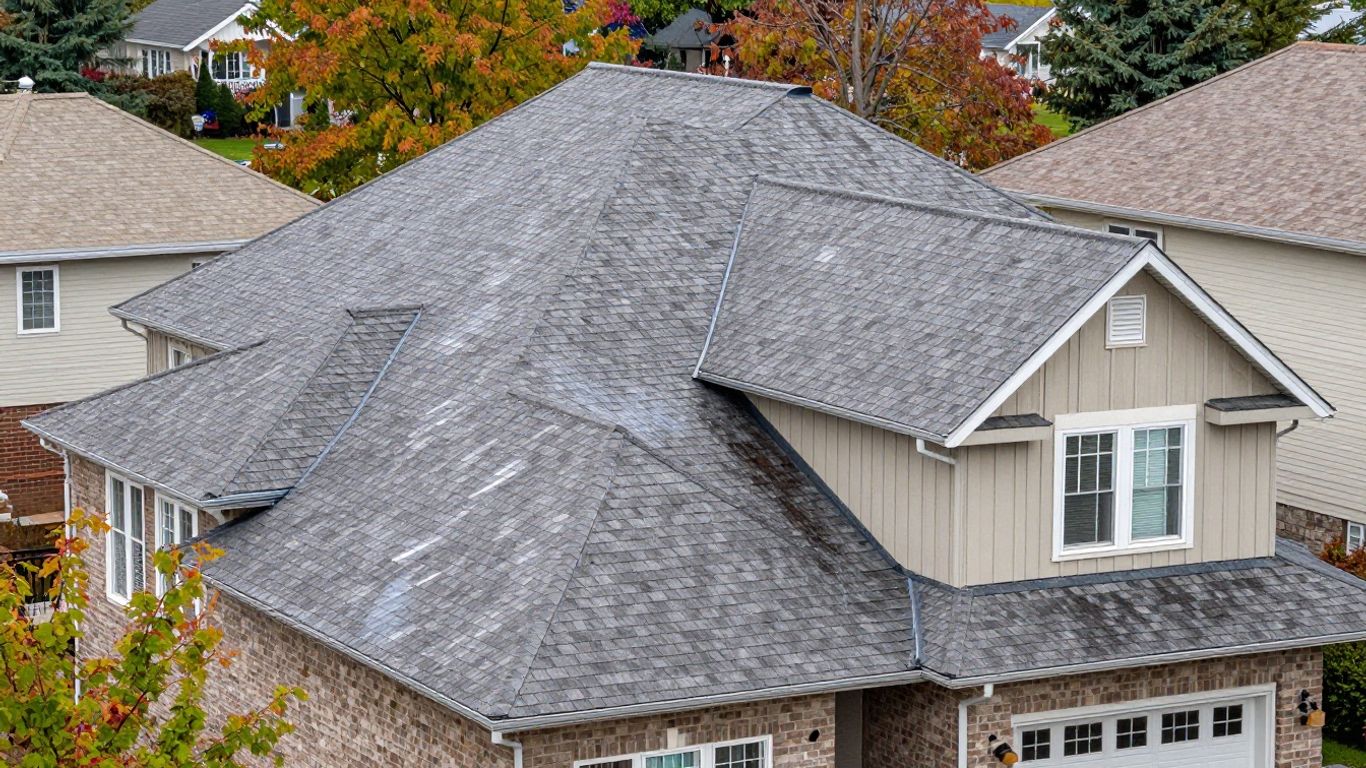
Roof Valleys in Oakville: Why They Leak and How They’re Protected
If you’ve noticed a ceiling stain that seems to show up after every storm, there’s a good chance a roof valley is involved. Roof Valleys Oakville homes rely on these sections to carry more water than almost any other part of the roof, which means small installation mistakes or years of debris buildup can show up here first. This guide explains why roof valleys leak, how valley flashing and ice and water shield are supposed to work together, and how to tell whether you’re looking at a quick repair or something bigger.
Key Takeaways
- Roof valleys handle a disproportionate amount of runoff, so small installation or maintenance problems can become serious leaks fast.
- Valley flashing should be at least 24″ wide (12″ on each side of the centerline) under Ontario Building Code Section 9.26, though we typically install wider coverage on steep-slope Oakville roofs.
- Ice and water shield membrane at valleys is usually installed 18″ to 36″ wide, centered on the valley line, before flashing goes down.
- A localized valley flashing repair typically costs less than a full valley replacement, though exact pricing depends on valley length, roof pitch, and the extent of damage found.
- Homes in Old Oakville, Bronte, Glen Abbey, and River Oaks see more valley debris buildup than newer subdivisions because of mature tree cover.
What Is a Roof Valley and Why It’s a Weak Point
A roof valley is the internal angle where two sloping roof sections meet. Rain and melting snow from both planes collect there before moving toward the eaves or a drainage point. That concentration makes valleys one of the most heavily used parts of a sloped roofing system. When you’re investigating roof valleys in Oakville, the visible damage on the surface is often only part of the story.
How Water Volume Concentrates at Valleys
On an ordinary roof plane, water travels down one slope. At a valley, runoff from two surfaces meets in a narrow channel, which can double or triple the volume of water moving across the same area during a heavy rain. Wind-driven rain can also move sideways beneath exposed shingle edges, while melting snow can linger in the channel during a freeze-thaw cycle. This is why a gap or lifted edge that would be harmless on a flat roof plane becomes a real problem in a valley: it’s exposed to constant flow instead of occasional drops.
Common Valley Types (Open, Closed, Woven)
An open valley leaves a visible strip of metal or membrane between the shingle fields. A closed-cut valley has shingles from one slope running across the valley and trimmed along the centerline, while a woven valley interlaces shingles from both roof slopes without any cutting. Each style can perform well when the materials, slope, fastening, and drainage details are correct. On a recent Bronte inspection, we found a closed-cut valley where the installer had cut the shingles too close to the centerline, leaving a 2-inch gap with no metal underneath. It looked fine from the ground.
Why Roof Valleys Leak in Oakville Homes
A valley leak often develops slowly, especially when debris hides the early signs. Seasonal rain, snow, wind, and repeated freeze-thaw cycles put more stress on valley joints than on any other part of the roof. Before assuming a ceiling stain means the whole roof has failed, the water path and valley assembly need to be traced and inspected directly.
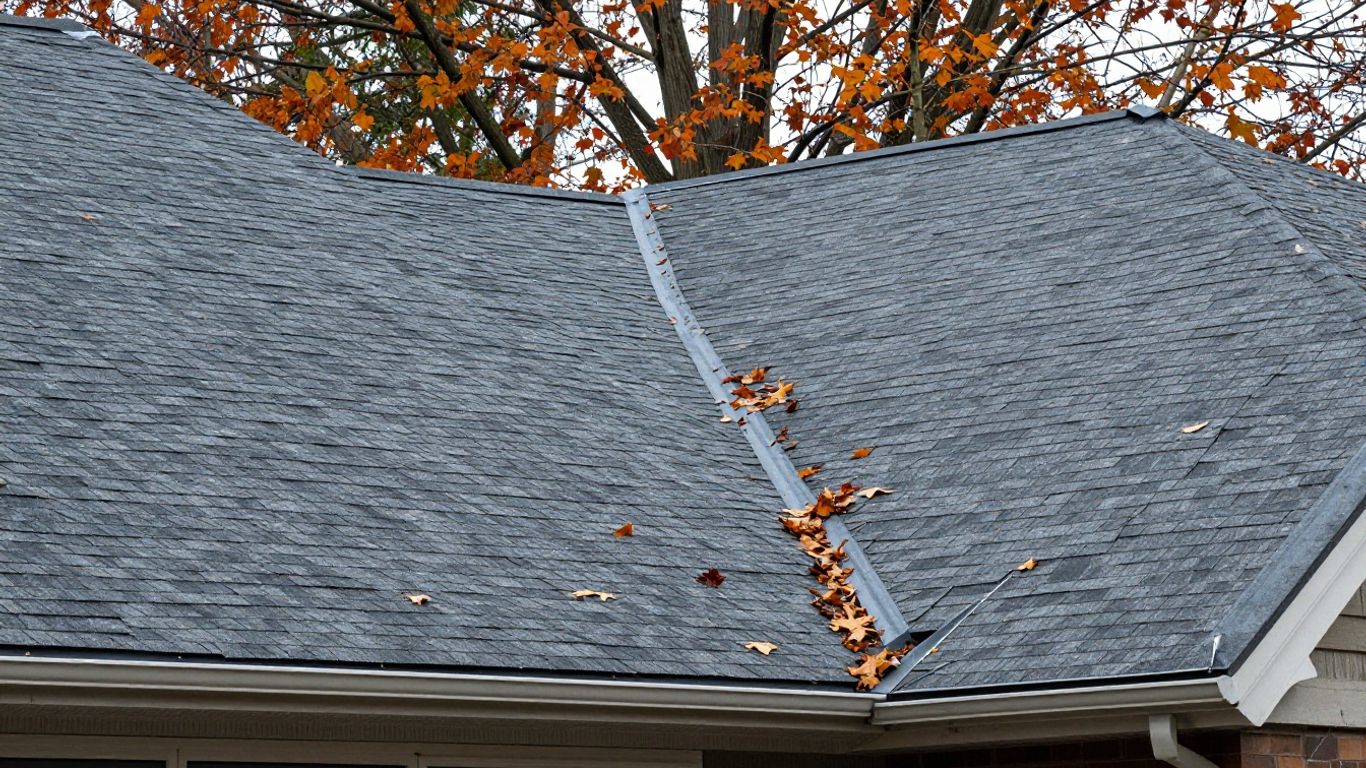
Debris Buildup From Oakville’s Mature Tree Canopy
Leaves, needles, twigs, and seeds settle in a valley and hold moisture against the shingles or metal underneath. In neighbourhoods with heavy tree cover, like Old Oakville and Glen Abbey, we see valleys that trap enough organic material to grow moss within two or three seasons if they aren’t cleared. If your property sits under mature trees, our mature tree canopy maintenance guide covers why post-storm inspections matter and how often valleys should be checked. Clearing debris should be done carefully; scraping or walking through a valley the wrong way can crack shingles that were otherwise fine.
Aging or Improperly Installed Flashing
Flashing is meant to guide water over the roof surface, not into the layers below it. With age, galvanized metal can corrode, sealant can separate, and fasteners can work loose. Installation errors include insufficient overlap between flashing sections, fasteners placed directly in the drainage path, sharply bent metal that creates a dam, or shingles cut too close to the valley centerline. These defects are easy to miss from the ground, which is why a proper valley flashing assessment has to look at the flashing, adjacent shingles, underlayment, and decking together.
Roof Valley Flashing: How It’s Supposed to Work
Valley flashing creates a water-resistant transition between two roof planes. Depending on the roofing design, it may be visible galvanized steel or aluminum, concealed beneath shingles, or built from a layered underlayment and shingle detail. The system has to give water a continuous downhill route while still allowing the surrounding materials to move slightly with weather and age.
Metal Valley Flashing vs. Shingle-Woven Valleys
Metal valley flashing gives you a defined, visible channel that’s easy to check during an inspection. Shingle-woven valleys rely more on consistent weaving and careful fastening, since there’s no metal to fall back on if the shingle pattern is off. A closed-cut shingle valley has its own detailing requirements and shouldn’t be judged by the same standard as a metal-lined valley.
| Valley approach | Visible drainage path | Main inspection concern | Typical maintenance issue |
|---|---|---|---|
| Open metal valley | Usually clear and visible | Corrosion, dents, exposed fasteners | Debris accumulation |
| Closed-cut valley | Mostly covered by shingles | Cut edges and water entry beneath shingles | Granule loss and lifted edges |
| Woven valley | Shingles overlap across the channel | Uneven weaving or excessive wear | Curling, cracking, trapped debris |
If a valley has been patched more than once, or the surrounding shingles are near the end of their service life, replacing only the visible metal strip usually doesn’t fix the underlying weakness. For Oakville homeowners considering a longer-lasting roofing system, metal roofing can be an alternative when full replacement is warranted.
Common Flashing Installation Mistakes
Problems often start when installers rush the valley details. Short metal sections get overlapped in the wrong direction (uphill piece under the downhill piece instead of over it), nails go where water actually runs, or shingles get cut unevenly and leave a vulnerable opening. Flashing installed without coordinating it to the underlayment or adjoining wall details is one of the most common causes of a leak on an otherwise new-looking roof.
Ice and Water Shield at Roof Valleys
Ice and water shield is a self-adhered rubberized membrane installed beneath the flashing and shingles for extra protection. It’s especially useful where water lingers, moves sideways, or backs up during snow and ice, which describes a valley almost perfectly. The membrane doesn’t replace correct flashing or properly installed shingles; it backs up the rest of the assembly if water gets past the outer covering.
Why Valleys Need Extra Membrane Coverage
Valleys take on concentrated runoff and can hold snow and ice longer than the rest of the roof. We typically run ice and water shield membrane 18″ to 36″ wide, centered directly on the valley line, before any flashing or shingles go down. Extending it onto the adjoining roof planes reduces the odds that a small breach reaches bare decking. For more detail on where this membrane matters most across a whole roof, see our ice and water shield protection breakdown for Oakville homes. If the deck underneath is already soft or stained, that needs to be addressed before any new membrane goes in, not covered over.
Signs of a Roof Valley Leak
A valley leak rarely shows up directly below the valley itself. Water can travel along rafters, decking, insulation, or framing before it reaches a ceiling or wall, so a stain inside your home should prompt a full inspection rather than a quick bead of caulk. Here’s what our crews look for first when a homeowner calls about a suspected valley problem.
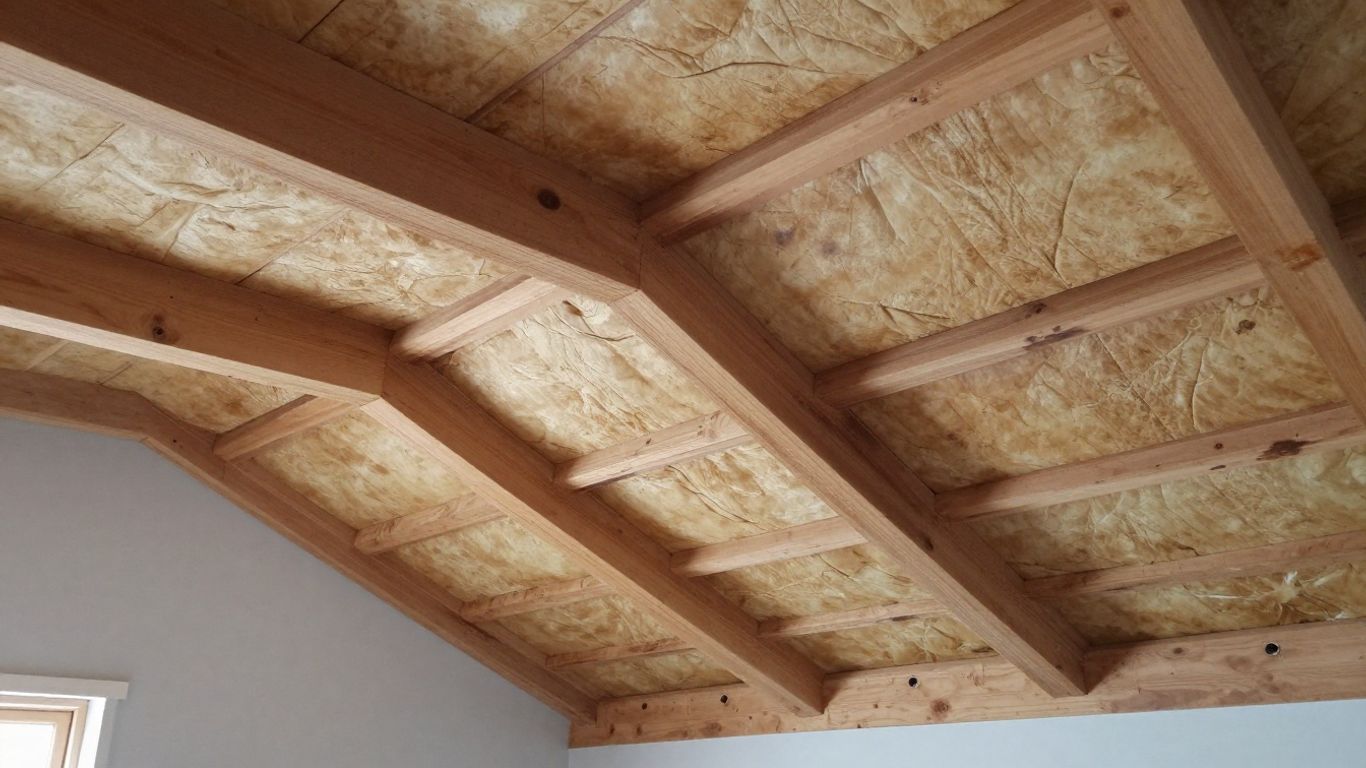
Interior Water Stains Near Valley Lines
Brown or yellow ceiling marks, peeling paint, damp insulation, and a musty smell can all point to moisture intrusion from a valley. A stain may look dry by the time you notice it, which doesn’t mean the leak has stopped; it usually means it’s only active during and shortly after rain or snowmelt. Water can also show up near an exterior wall or upper-floor ceiling several feet from the actual entry point, so avoid cutting into drywall before the roof and attic have been checked.
Granule Loss or Shingle Wear Along the Valley
From the ground, look for bare patches, dark streaks, exposed underlayment, curled edges, or a concentration of granules collecting in the gutter below the valley. Wear on one side of a valley more than the other usually means runoff isn’t moving evenly, often because debris is rubbing against the shingles on that side. A few loose granules don’t prove a leak on their own, but a clear pattern along one edge is worth a closer look.
Seeing a stain that shows up after every rain? Book a free roof valley inspection with our Oakville crew and we’ll trace the water path before recommending any work.
Roof Valley Leak Repair vs. Full Valley Replacement
A localized repair makes sense when the surrounding shingles are sound, the decking is dry and firm, and the defect is limited to a small, accessible section, for example, correcting one short piece of flashing or clearing trapped debris and resealing a properly prepared transition. The goal of a roof leak repair at this scale is to restore the drainage path without disturbing more of the roof than necessary.
A full valley replacement becomes in Oakville the more likely answer when flashing is broadly corroded, the membrane has failed along most of the valley’s length, the decking underneath is damaged, or repeated small repairs haven’t stopped the leak. It can also make sense when the shingles next to the valley are brittle enough that removing them for a partial repair would cause additional damage. When you get a quote, ask what was actually found below the surface, and make sure the scope distinguishes valley-specific work from any unrelated roof replacement being proposed.
Why Choose Above It All Roofing for Roof Valley Protection in Oakville
Our Above It All Roofing Oakville roofing crew inspects the whole water path on every valley call: the valley surface, adjacent shingles, flashing, underlayment, decking, gutters, and attic-side evidence, not just the first stain a homeowner points out. That matters most on homes that have gone through several seasons of debris, snow, and freeze-thaw movement without a valley-specific check.
You should walk away from any assessment with a clear explanation of the recommended work, whether that’s routine maintenance, a flashing repair, or a full valley section replacement. We’ll show you what we found with photos before recommending anything, and the scope will separate valley work from any unrelated repairs so you know exactly what you’re paying for.
Conclusion
Roof valleys carry more water than any other part of your roof, which is exactly why small defects here turn into real leaks faster than they would elsewhere. Keeping valleys clear of debris, checking flashing condition, and confirming ice and water shield coverage can catch a problem while it’s still a manageable repair instead of a full valley replacement.
Call 647-771-1554 for a free Oakville roof valley inspection, and ask about 0% interest financing for 12 months if your valley needs a full section replacement.
Frequently Asked Questions
Why do roof valleys leak more often than other roof areas?
They collect runoff from two roof slopes into one narrow channel. That higher water volume, combined with debris, snow, ice, and material movement, gives small installation defects far more opportunity to cause a leak than they would on a flat roof plane.
How can you tell whether a valley leak is active?
Look for fresh dampness, an expanding stain, dripping during or right after rain, wet insulation, or darkened decking in the attic. Because water travels before it shows up, the interior mark isn’t always directly below the entry point.
Is metal valley flashing better than a woven valley?
Neither is automatically better for every roof. Performance depends on the roof design, materials, slope, installation quality, drainage, and the ongoing condition of the valley itself.
Does ice and water shield stop every valley leak?
No. It adds a protective layer beneath the roofing materials, but it can’t compensate for damaged decking, poor flashing, blocked drainage, or incorrectly installed shingles. It’s one part of a complete valley assembly, not a standalone fix.
When does a valley need replacement instead of repair?
Replacement makes sense when damage is widespread, the flashing or membrane has failed across most of the valley, the decking is compromised, or repeated localized repairs haven’t resolved the leak. The condition of the shingles right next to the valley also factors into that decision.
Can leaves and twigs really cause a roof valley leak?
Yes. Debris can block runoff, retain moisture against shingles or metal, and hide damaged flashing underneath. This is especially relevant for homes under mature tree cover, where valleys need more frequent clearing than the rest of the roof.
Should you inspect the attic after noticing a valley stain?
Yes, if you can do so safely. Look for damp insulation, dark decking, a musty smell, or visible water trails, but avoid disturbing any damaged materials. What you find can help a roofer trace the exterior source faster.