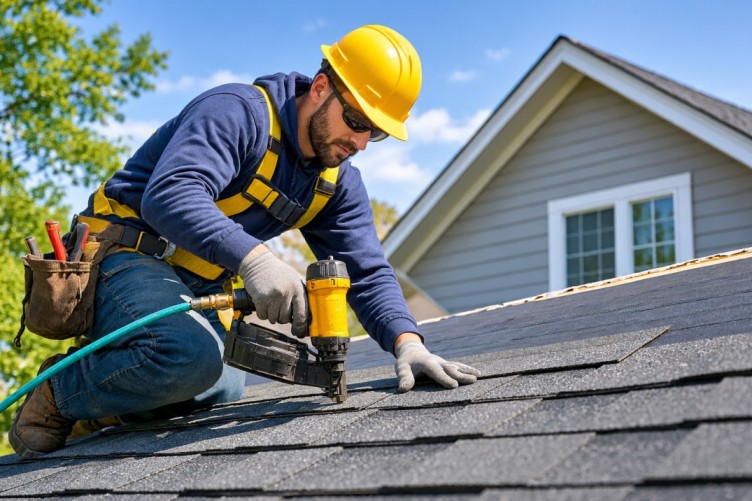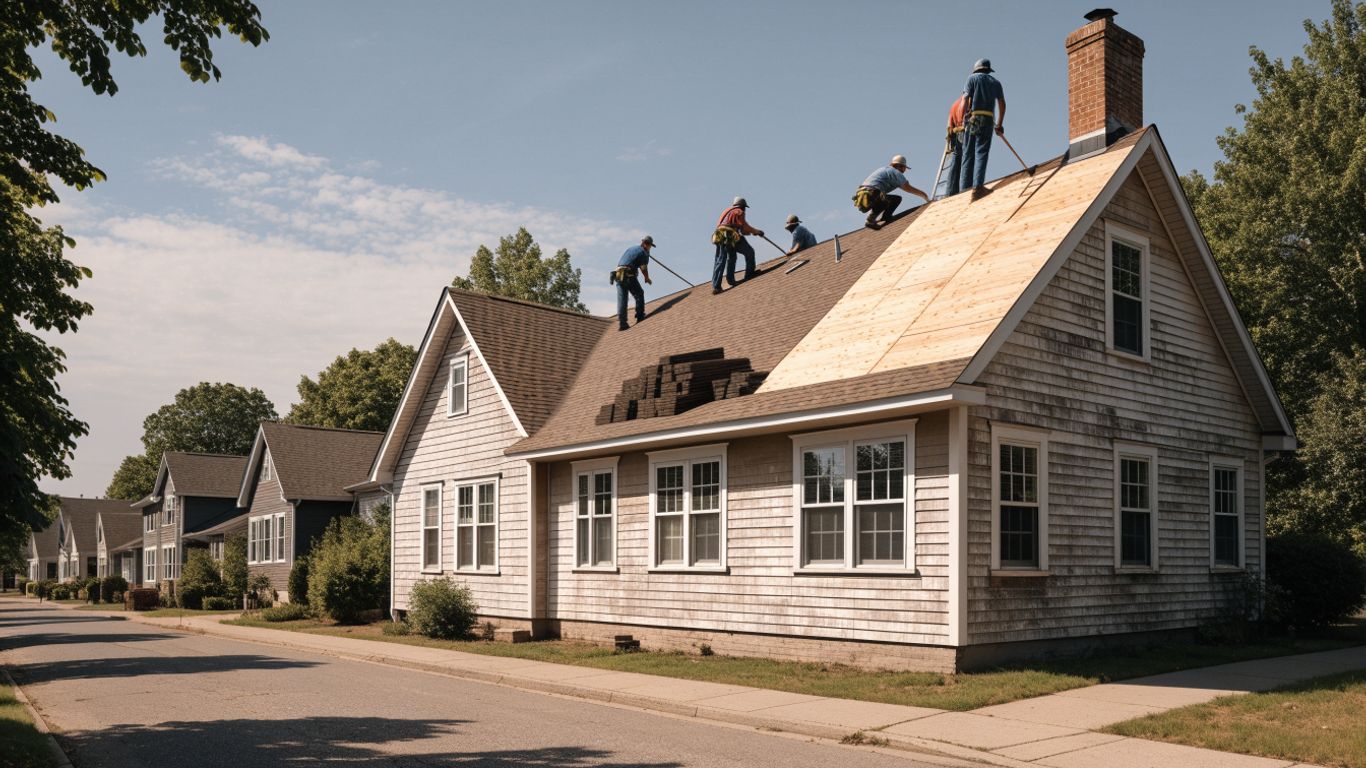
A 2,300 sq ft shingle roof installation in Ontario typically costs between $14,000 and $28,500 fully installed, a range shaped primarily by shingle grade and whether the project includes tear-off of an existing system.
If you’re researching this topic, there’s a good chance you’re in a specific situation: you own a 4-bedroom two-storey home built somewhere between 1995 and 2010, and the original shingles are showing signs of age after 15–25 Ontario winters. That era of Ontario construction, which produced enormous numbers of homes across Mississauga, Oakville, Burlington, Milton, Georgetown, Etobicoke, and Caledon, is now hitting a wave of first roof replacements. Understanding what you’re actually buying, and how to evaluate competing quotes, matters considerably at this price point.
2,300 Sq Ft Shingle Roof Installation Cost Breakdown in Ontario
| Cost Category | Typical Range |
|---|---|
| Standard architectural shingles — fully installed | $14,000 – $21,000 |
| Premium shingles — CertainTeed Landmark Pro, GAF Timberline HDZ | $20,000 – $28,500 |
| Tear-off and disposal of existing shingles | $1,600 – $3,500 |
| Decking replacement where required | $80 – $140 per sheet |
| Ice and water shield + synthetic underlayment | Included in complete quotes |
| Ventilation upgrade — ridge vent and baffles | $700 – $2,000 |
All figures are Ontario-specific, include HST, and reflect 2025 material and labour costs in the GTA, Halton, and Peel regions.
The First Replacement Moment — What Ontario Homeowners Need to Know
Homes built between 1995 and 2010 in Ontario’s growth communities were typically roofed with builder-grade 3-tab or entry-level architectural shingles during construction. Those products were rated for 25 years but installed over ventilation systems designed to code minimum rather than optimal performance, often reaching the end of useful life at 18–22 years in actual Ontario conditions.
The replacement decision becomes clear when you’re seeing any combination of: granules accumulating in the eavestroughs after rain, shingles that are cupping or curling at the edges, daylight-visible cracking on the shingle surface, or leaks appearing around pipe penetrations or dormers after storms.
At 2,300 sq ft, the stakes of waiting are higher than on a smaller roof. Water infiltration that starts at a single point works laterally under shingles and along decking before appearing inside the home, and by the time a ceiling stain is visible, the damage extends well beyond the leak source. On a large home, undetected moisture damage in the decking can add $2,000–$5,000 in repair costs to a replacement that would have been straightforward six months earlier.
The Attic Insulation Opportunity — Doing Both at Once
A 2,300 sq ft roof replacement is the best opportunity you’ll have to address attic insulation without significant disruption, and it’s an opportunity most homeowners miss.
When the old shingles are off, the decking is exposed, and adding ventilation baffles in the eaves is straightforward before new underlayment goes down. At the same time, having an insulation contractor blow in additional attic insulation while the roofers are working adds minimal disruption because the attic access work happens from inside the home independently of the roof crew.
Ontario Building Code currently recommends R-60 attic insulation for new construction. Many Ontario homes from the 1995–2010 era have R-20 to R-30, roughly half the recommended value. Upgrading to R-50 or R-60 during a roof replacement typically costs $1,500–$3,500 for a home this size, reduces heating costs meaningfully through Ontario winters, and allows the new shingle system to perform at its rated lifespan because attic temperatures are properly regulated. It’s not glamorous, but it’s one of the better investments available at this stage of a home’s life.
Ice Dam Formation on 2,300 Sq Ft Ontario Homes — What Causes It and How Installation Prevents It
Ice damming is the most common winter roofing problem for Ontario homes in this size range, and it’s almost entirely preventable with correct installation practices.
Ice dams form when heat escaping from a poorly insulated or poorly ventilated attic warms the upper roof surface, melting snow that then flows down to the cold eaves and refreezes. The dam blocks further melt water from draining, which backs up under shingles and finds its way into the home.
On a new installation, three things prevent this: proper attic ventilation to keep the roof surface uniformly cold, ice and water shield along all eaves and valleys (minimum 900mm from the interior wall per Ontario Building Code, though better contractors extend further), and adequate attic insulation to keep heat from escaping in the first place.
Verify all three are in your quote. Ask specifically: how far up from the eave does your ice and water shield extend? Minimum code is one specification the specification that actually prevents ice damming in a hard Ontario winter is another.
What a Proper Written Quote Should Contain
At $14,000–$28,500, a 2,300 sq ft roof replacement warrants a detailed written quote, not a single number on a page. Before signing anything, confirm your quote specifies:
- Shingle manufacturer, product line, and colour: not just “architectural shingles”
- Underlayment type: synthetic vs felt, and which product
- Ice and water shield coverage: linear footage or specific coverage area
- Ventilation plan: what’s being installed and where
- Tear-off scope: how many layers, disposal included
- Decking contingency: price per sheet if damaged decking is found
- Flashing specification: material type and what’s being replaced vs reused
- Warranty terms: contractor workmanship warranty and manufacturer warranty with registration confirmation
- WSIB clearance: confirmation the contractor and crew are covered
- Cleanup process: magnetic roller sweep explicitly mentioned
A contractor who provides all of this without being asked is almost always the better hire, regardless of where their number lands relative to competitors.
Browse All Ontario Roof Cost Guides
This guide covers the 2,300 sq ft shingle installation specifically. For a different size, material, or job type, our full cost directory covers every combination:
→ Ontario Roof Replacement Cost Guide — All Sizes & Materials
Frequently Asked Questions
My neighbour just replaced their roof; should I have mine inspected too?
If your home is roughly the same age as your neighbour’s and was built in the same subdivision, the answer is almost certainly yes. Production homes built in the same phase typically use the same materials, the same subcontractors, and the same installation standards. If your neighbour’s roof needed replacement after 18–22 years, yours is on a similar timeline. A professional inspection takes about an hour and tells you whether you’re planning ahead or already behind.
How do I verify a contractor’s WSIB status before hiring?
WSIB (Workplace Safety and Insurance Board) coverage protects you from liability if a worker is injured on your property. You can verify any Ontario contractor’s WSIB status at wsib.ca using their business name or WSIB account number. Ask for the number and check it yourself; don’t accept a verbal assurance. Also ask for a WSIB clearance certificate dated within the past 30 days. A legitimate contractor has this on hand and provides it without hesitation.
Can I combine attic insulation with my roof replacement?
Yes, and it’s worth planning for. The roofing crew and insulation contractor work independently, one on the roof surface, one inside the attic, so there’s no scheduling conflict. Coordinate with your roofing contractor in advance so they know to install ventilation baffles in the eave spaces before underlayment goes down. These baffles are essential for insulation to work correctly and cost very little to add during installation.
What’s the right shingle for a 2,300 sq ft Ontario home if I plan to stay long-term?
For a home you plan to own for 15 or more years, a premium architectural shingle, CertainTeed Landmark Pro or GAF Timberline HDZ, is the financially rational choice. At 2,300 sq ft, the upgrade from standard to premium costs roughly $5,000–$7,000 more in total. In return, you get a non-prorated 50-year product warranty on qualifying CertainTeed products (when installed by a Select ShingleMaster contractor), a higher wind resistance rating, and a shingle that meaningfully outperforms the standard product in Ontario freeze-thaw conditions. The cost per additional year of service life is lower than most homeowners expect when they work through the numbers.